Welcome to Yubo Zhang's Page!
at Karolinska Institutet, Stockholm, Sweden 2022
About
Hi, there! I am a postdoctoral researcher at RadboudUMC in the Netherlands, currently conducting medical research within the 2000HIV Project founded by Professor Mihai Netea and Professor André van der Ven. My primary research objective is to leverage computational biology methods, including multi-omics analysis, machine learning, and deep learning, along with a variety of biological laboratory techniques such as cell culture, experimental animals, PCR, and flow cytometry, to address current challenges in the fields of immunology, molecular biology, and genomics.
Open your eyes & Open your mind
—-- Enlighten by
Corporation
News
【2024.11.01】 Yubo Zhang started postdoctoral research at RadboudUMC.
【2024.09.28】 Yubo Zhang has obtained a Ph.D. degree.
【2024.04.07】 Yubo Zhang’s personal page opened!
Resume
Career
- Post Doctoral ResearcherNetea Mihai lab, RadboudUMC.
Education
- Doctoral CourseComputational Biology and Medical Science, The University of Tokyo
- Master DegreeBioinformatics and Biochemistry, The George Washington University
- Bachelor DegreePharmaceutical Biotechnology, China Medical University
Research
Human Aging & Biological Age
Chronological age reflects the passage of time, but it does not fully explain why people of the same age often show large differences in health, immune function, and disease risk. Biological age instead captures the functional state of cells, tissues, and organs, providing a more informative measure of aging-related decline. Advances in aging biology have identified a set of conserved molecular and cellular processes—often referred to as the hallmarks of aging—including epigenetic alterations, mitochondrial dysfunction, cellular senescence, and dysregulated intercellular communication, which collectively drive age-related functional deterioration. Because aging is a major driver of chronic diseases, understanding biological aging is essential for linking molecular changes to clinical outcomes and healthspan.
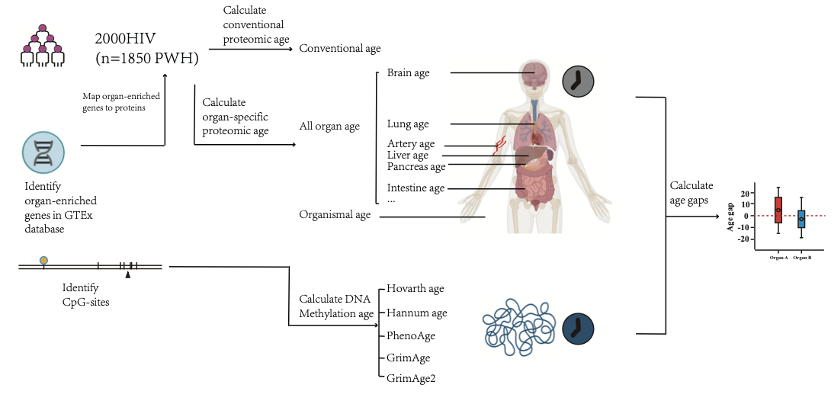
In this research direction, biological aging is studied as a systemic process spanning organ-specific, immune, and epigenetic dimensions, giving rise to substantial heterogeneity among individuals. Such heterogeneity is reflected in age acceleration and distinct aging endotypes, which in turn shape clinically meaningful outcomes, including immune remodeling, age-associated comorbidities, and mortality risk. Understanding these outcomes requires linking observable aging phenotypes to their underlying biological programs, from coordinated transcriptomic and proteomic changes to the dysregulation of transposable elements. Viewed through this lens, aging trajectories are not fixed but can be reshaped by therapeutic interventions, highlighting the plasticity of human aging across populations and contexts. This project is in collaboration with Professor Linos Vandekerckhove at Ghent University and Professor Cheng-Jian Xu , Professor Yang Li at CiiM.
In this research direction, biological aging is studied as a systemic process spanning organ-specific, immune, and epigenetic dimensions, giving rise to substantial heterogeneity among individuals. Such heterogeneity is reflected in age acceleration and distinct aging endotypes, which in turn shape clinically meaningful outcomes, including immune remodeling, age-associated comorbidities, and mortality risk. Understanding these outcomes requires linking observable aging phenotypes to their underlying biological programs, from coordinated transcriptomic and proteomic changes to the dysregulation of transposable elements. Viewed through this lens, aging trajectories are not fixed but can be reshaped by therapeutic interventions, highlighting the plasticity of human aging across populations and contexts. This project is in collaboration with Professor Linos Vandekerckhove at Ghent University and Professor Cheng-Jian Xu , Professor Yang Li at CiiM.
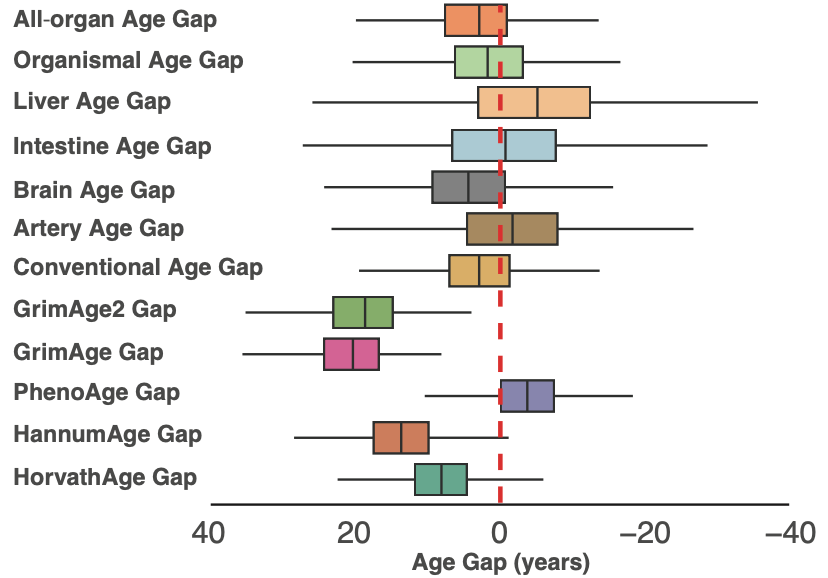
Systemic, organ-specific, and epigenetic aging metrics capture heterogeneous aging patterns in a treated HIV population.
Feature Paper
Train immunity and innate immune memory
Historically, it has been understood that the immune response that targets a specific pathogen was governed by the adaptive immune system, while innate immune cells, including macrophages, were merely considered as the initial natural barrier of the immune system. However, recent studies have unveiled that, akin to adaptive immune cells such as T cells and B cells, innate immune cells are also capable of developing short-term or long-term immune memory. Several clinical trials have illustrated that this non-specific memory can also enhance the immune response against the second infection of the pathogen, even other unrelated pathogen, including COVID-19. In Netea et al. 2016 reviewed this phenomenon as the concept of trained immunity. Accumulating evidence suggests that epigenetic reprogramming is a core driving element of trained immunity. Deciphering the mechanisms behind trained immunity and how to successfully harness it for vaccine development will be pivotal questions in this research field. This project is in collaboration with Senior Researcher Yutaro Kumagai at AIST and Professor Jun Kunisawa and his student Kei Ishida at Osaka University.
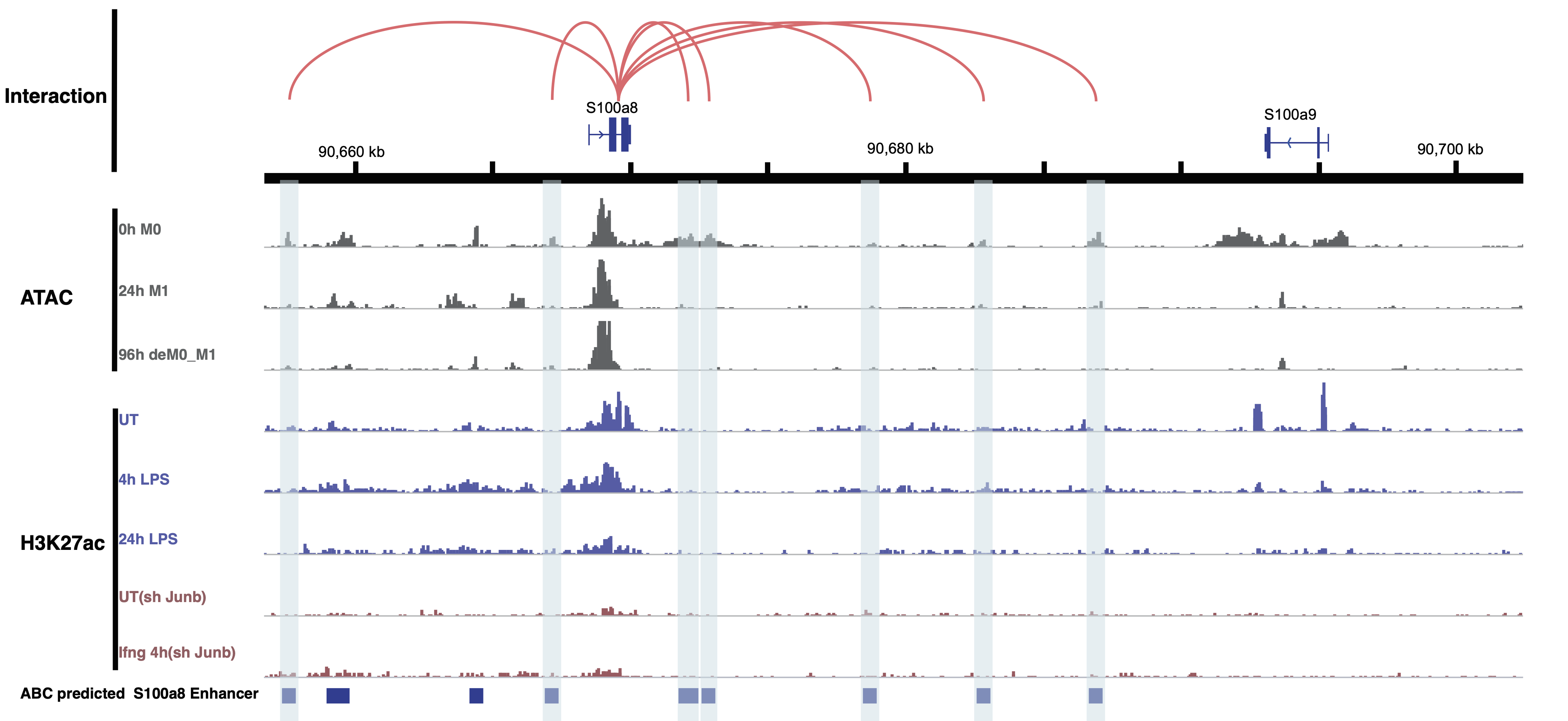
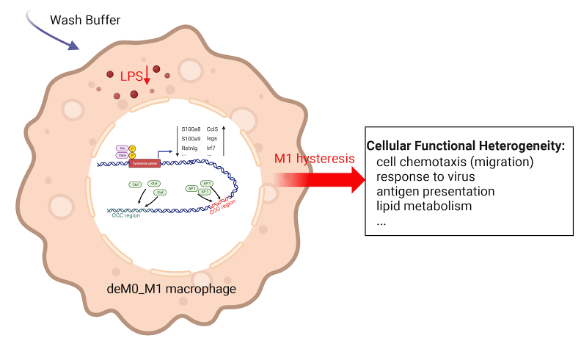
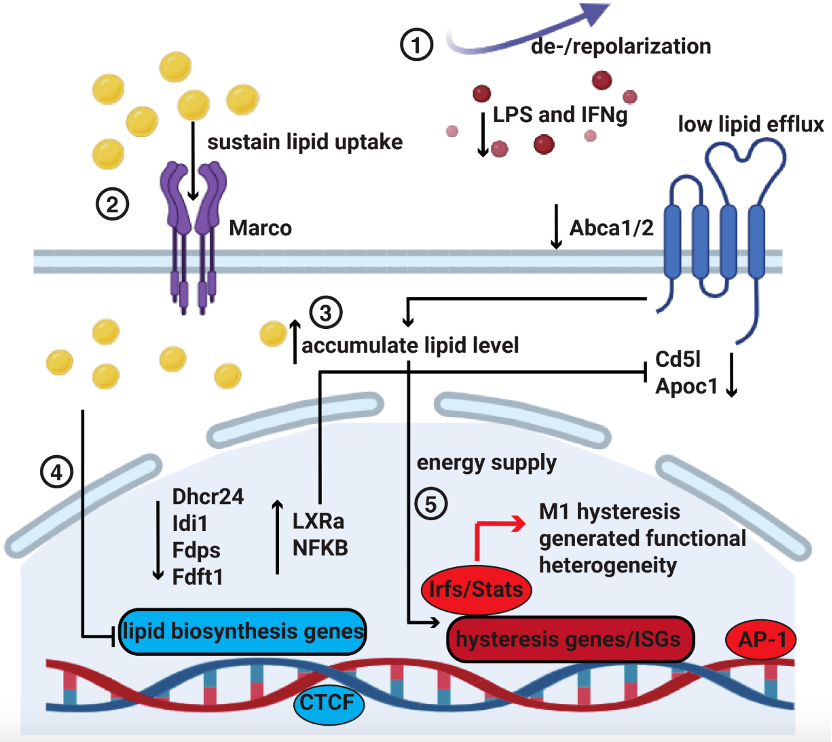
Epigenetic regulation on chromatin during macrophage hysteresis (memory) generation.
Feature Paper
Publications
Yubo Zhang, Vasiliki Matzaraki, Nadira Vadaq, Marc J T Blaauw, Wilhelm Vos, Albert Groenendijk, Louise van Eekeren, Janneke Stalenhoef, Marvin Ah Berrevoets, Casper Rokx, Mareva Delporte, Twan Otten, Leo A B Joosten, Cheng-Jian Xu, Yang Li, Linos Vandekerckhove, Andre van der Ven & Mihai G Netea. (2026). Opposite effects of chronic HIV infection and antiretroviral medication on organismal and organ-specific biological aging. Nat Commun.
Yubo Zhang, Wenbo Yang, Yutaro Kumagai, Martin Loza, Yitao Yang, Sung-Joon Park & Kenta Nakai (2025). "In Silico Analysis Revealed Marco (SR-A6) and Abca1/2 as Potential Regulators of Lipid Metabolism in M1 Macrophage Hysteresis". Int J Mol Sci.
Yubo Zhang, Wenbo Yang, Yutaro Kumagai, Martin Loza, Weihang Zhang, Sung-Joon Park & Kenta Nakai (2023) Multi-omics computational analysis unveils the involvement of AP-1 and CTCF in hysteresis of chromatin states during macrophage polarization. Front Immunol.
Yitao Yang, Yang Cui, Sung-Joon Park, Xin Zeng, Yubo Zhang, Martin de Jesus Loza Lopez & Kenta Nakai (2023) STAIG: Spatial transcriptomics analysis via image-aided graph contrastive learning for domain exploration and alignment-free integration. Nat Commun.
Charles P. Hinzman, Meth Jayatilake, Sunil Bansal, Brian L. Fish, Yaoxiang Li, Yubo Zhang, Shivani Bansal, Michael Girgis, Anton Iliuk, Xiao Xu, Jose A. Fernandez, John H. Griffin, Elizabeth A. Ballew, Keith Unger, Marjan Boerma, Meetha Medhora & Amrita K. Cheema (2022) An optimized method for the isolation of urinary extracellular vesicles for molecular phenotyping: detection of biomarkers for radiation exposure. J Transl Med.
Yaoxiang Li, Jatinder Singh, Rency Varghese, Yubo Zhang, Oluseyi O. Fatanmi, Amrita K. Cheema & Vijay K. Singh (2021) Transcriptome of rhesus macaque (Macaca mulatta) exposed to total-body irradiation. Sci Rep.
Contact
Radboud University Medical Center
Geert Grooteplein Zuid 10, 6525 GA Nijmegen, Netherlands
Yubo Zhang
yubo.zhangATradboudumc.nl
Geert Grooteplein Zuid 10, 6525 GA Nijmegen, Netherlands
Yubo Zhang
yubo.zhangATradboudumc.nl
Copyright © 2025 Yubo Zhang. All rights reserved.
Last updated at Feb. 2026.